
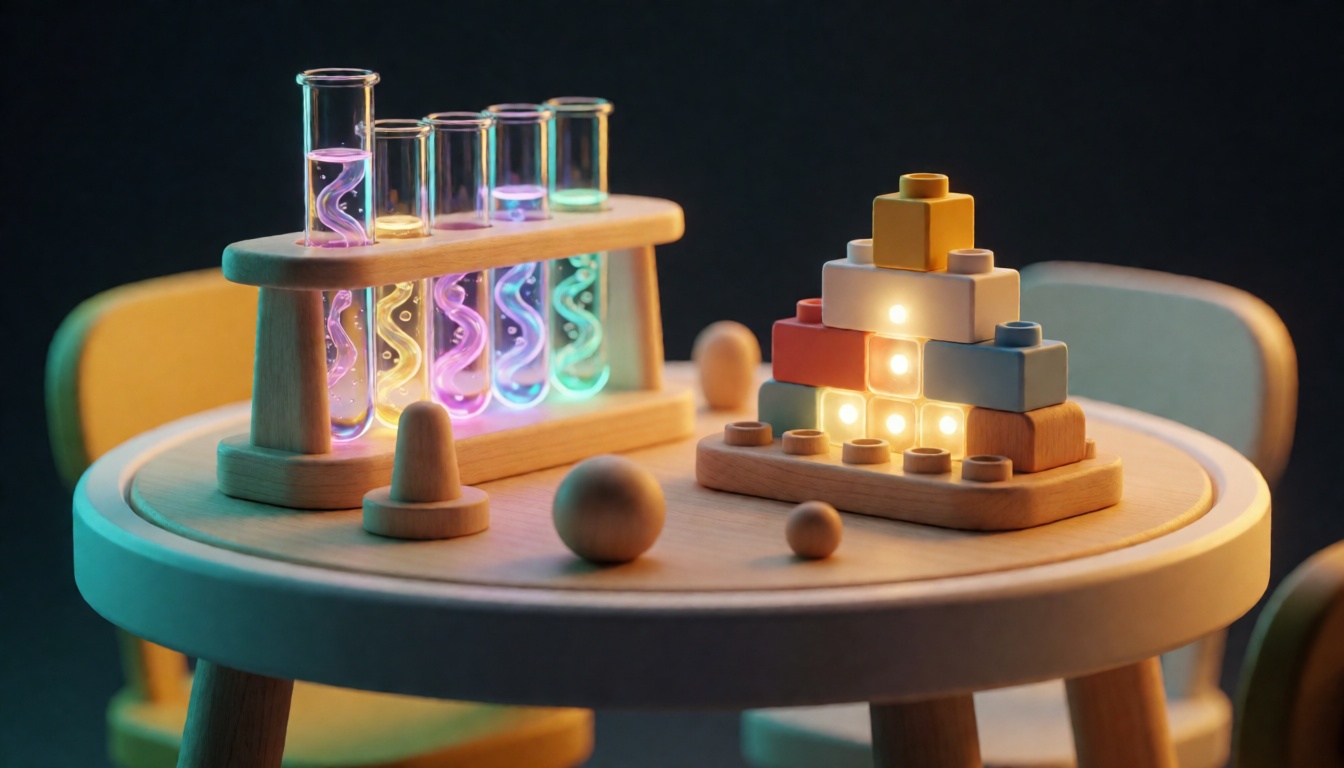
Best Screen-Free STEM Kits & Educational Toys That Kids Actually Love
Disclosure: This post contains affiliate links. If you buy through them, we may earn a commission at no extra cost to you. Learn more.
Every parent knows the feeling: you buy an “educational” toy, it gets ten minutes of attention, and then it’s back to the tablet. The toys and kits that last are the ones kids can do something with — build it, mix it, light it up, climb it, play pretend in it.
This guide brings together hands-on, screen-free (or screen-light) picks for every age, from Montessori wooden toys for toddlers to real chemistry and physics experiments for tweens and creative build projects for teens.
- 1–3 years: Tiny Land Montessori toy sets and wooden activity toys
- 3–6 years: Tiny Land play kitchens, play tents, art easels and Pikler triangles
- 5–9 years: MEL STEM monthly kits
- 8–14 years: MEL Physics and MEL Math
- 10–16 years: MEL Chemistry
- Teens (and adult LEGO fans): Lightailing LED light kits for LEGO sets
What makes a STEM toy worth buying
- Hands first: the best kits get kids building, testing and tinkering — not watching.
- Right for the age: too easy gets boring; too hard gets abandoned. Stick to the recommended age range, especially for chemistry.
- Open-ended play: wooden toys, play kitchens and building sets can be used a hundred different ways.
- Built to last: solid materials survive siblings and can be passed on.
- Grown-up friendly: clear instructions and manageable mess make it far more likely you’ll actually do it together.
1. MEL Science — best monthly science kits (ages 5–16+)
In one line: a monthly box of real science experiments and builds, matched to your child’s age.
- Ages
- 5–16+ (by subject)
- Subjects
- STEM, Physics, Math, Chemistry (plus Medicine for 14+)
- Price
- From about $29.90/month on longer plans; around $39.90 month-to-month
- Screen time
- Low — optional app and online lessons
- Flexibility
- Pause or cancel any time
MEL Science sends a hands-on science kit every month, with everything needed for real experiments and builds. You choose a subject to match your child’s age and interests:
| Subscription | Recommended ages | What kids do |
|---|---|---|
| MEL STEM | 5–9+ | Build working models and simple machines while learning how everyday things work |
| MEL Physics | 8–14+ | Assemble devices and explore electricity, magnetism, light and mechanics |
| MEL Math | 8+ | Puzzles and hands-on projects that make maths tangible |
| MEL Chemistry | 10–16+ | Real chemistry experiments with lab-style equipment and safety gear |
Each kit comes with illustrated step-by-step instructions, and MEL also offers optional app and online lessons that explain the science behind each experiment. Subscriptions start at about $29.90 a month on longer plans (around $39.90 month-to-month at the time of writing), and you can pause or cancel.
- Real experiments you can’t easily put together yourself
- Clear age-based tracks
- New project every month keeps interest high
- Ongoing subscription cost
- Younger kids will need an adult alongside, especially for chemistry
Best for: kids who ask “why?” about everything, homeschoolers and families who want a regular science afternoon.
Explore MEL Science kits →2. Tiny Land — best screen-free wooden toys and play spaces (ages 1–6)
In one line: classic wooden toys and cosy play spaces for open-ended, screen-free play.
- Ages
- About 1–6 years
- Range
- Montessori sets, play kitchens, Pikler triangles, easels, play tents
- Price
- Roughly $55–$170 for most items (sales are frequent)
- Screen time
- None
- Best for
- Toddlers, preschoolers and natural-material lovers
Tiny Land was started by parents who wanted to share their love of traditional wooden toys. Their range is built around open-ended, imaginative and active play — the kind that quietly builds early STEM skills like problem solving, coordination and cause and effect.
- Montessori toy sets by age — curated boxes for specific stages (for example 13–15 and 16–18 months) with stackers, shape sorters and activity cards.
- Active play — Pikler triangle climbing sets, activity walkers and stepping stones for balance and gross motor skills.
- Pretend play — wooden play kitchens, a doctor kit and dollhouses for role-play and language.
- Creative corners — art easels and cosy play tents and teepees that give kids a space of their own.
Best for: toddlers and preschoolers, and parents who prefer natural materials over plastic and screens.
Keep in mind: larger pieces like kitchens and climbing sets need floor space and some assembly.
3. Lightailing — best creative upgrade for LEGO builders (teens and up)
In one line: plug-in LED light kits made to fit specific LEGO sets.
- Ages
- Teens and adults (younger with help)
- What’s included
- LEDs, cables and battery box — LEGO set sold separately
- Power
- USB or AA/AAA batteries (usually not included)
- Price
- Many kits under about $50
- Best for
- LEGO fans who love displaying their builds
If your child already loves LEGO, Lightailing adds a new challenge: LED light kits designed for specific LEGO sets, from city skylines and castles to vehicles and seasonal builds. Kids fit tiny lights and thin cables through the model, then power it by USB or batteries — a fun introduction to simple circuits and careful, patient building.
- Makes finished sets look spectacular on display
- Kits made for specific set numbers
- Great gift alongside a new LEGO set
- LEGO set not included
- Installation is fiddly — best for older kids, teens or with adult help
- Batteries usually not included
Tip: always match the light kit to your exact LEGO set number before ordering.
Find a Lightailing kit for your set →Comparison at a glance
| Brand | Ages | Type | Screen time | Best for |
|---|---|---|---|---|
| Tiny Land | 1–6 | Wooden toys, play kitchens, tents, climbing | None | Imaginative and active play |
| MEL Science | 5–16+ | Monthly science subscription | Optional app lessons | Real experiments and builds |
| Lightailing | Teens+ | LED kits for LEGO sets | None | Patient builders, display pieces |
Tips to keep kids interested
- Make it a ritual: a regular “science Saturday” or build night works better than random sessions.
- Let them lead: ask what they think will happen before each experiment.
- Display the results: a lit-up LEGO model or a finished project on a shelf is great motivation for the next one.
- Rotate toys: put some away and bring them back later — old favourites feel new again.
Our verdict
For toddlers and preschoolers, Tiny Land wooden toys and play spaces offer lasting, screen-free play. From age five, a MEL Science subscription is one of the easiest ways to bring real, hands-on science into your home every month. And for older kids who already love LEGO, a Lightailing light kit turns a finished set into a new building challenge.
FAQ
What is a good STEM toy for a 5-year-old?
Look for hands-on building and simple experiments with short projects — MEL STEM (ages 5–9+) is designed for this age, and open-ended toys like play kitchens and building sets work well too.
Are chemistry kits safe for kids?
Reputable kits are designed for specific age ranges and include safety equipment and instructions. Follow the recommended age (MEL Chemistry is 10–16+) and supervise younger children.
Can I cancel a MEL Science subscription?
MEL Science says you can pause or cancel your subscription at any time. Check the terms of your plan before buying, as longer plans are paid upfront.
Do Lightailing kits include the LEGO set?
No. Each light kit is made to fit a specific LEGO set, which you buy separately.
Last updated: November 2026. Prices, age ranges and products are set by each brand and may change.