
No one knows exactly how the Great Chicago Fire of 1871 started, but the most popular story pins it all on a cow.
As the legend goes, a cow belonging to Catherine O’Leary kicked over a lantern in her barn one dry night in early October, sparking a blaze that, in collaboration with Chicago’s notoriously strong south-west winds, tore through wooden buildings and turned one-third of the commerce-forward city to ash within days.
That destruction gave rise to what I believe is the most beautiful city in America, a view echoed by Condé Nast Traveler readers, who have named Chicago the “Best Big City in the US” nine years in a row.
READ MORE: Thinking about a USA holiday in 2026? Here are some things you should know
Destructive flames are integral to the legacy of great American cities like San Francisco, Atlanta and Seattle. The latter was even built as an entirely new city, layered on top of the old Seattle with a more sustainable design.
Yet, it’s Chicago that’s the most impressive “phoenix city”.
Due to its importance as a trade route, an influx of investment following the Great Fire helped rebuild the city at the crossroads of architecture and commerce.
The invention of electricity led to the elevator, which gave rise to the skyscraper, helping Chicago pioneer modern urban planning under Daniel Burnham’s ‘City Beautiful’ movement. After the 1893 World’s Columbian Exposition, Chicago became a proving ground for emerging architectural schools and future visionaries like Frank Lloyd Wright.
READ MORE: The ‘tranquil’ island you should visit instead of Bali, according to expert
At the same time, the evolving Chicago School of architecture benefited from the city’s proximity to the steel mills of the Great Lakes district, revolutionising buildings by allowing architects to install larger windows for greater natural light and ventilation.
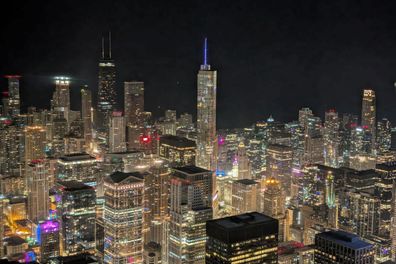
The result is a skyline that spans Gothic Revival to Mid-Century Modern. By day, it looks like a glistening jewellery box. When the sun falls, it starts to appear as a shadowy, matte black monster.
Like taking a safari of steel and ambition
The area around Chicago’s River Walk and the so-called Magnificent Mile is like one big open-air museum. I like to call it the Museum of Ambition, and I’ve been paying admission since I was in my early 20s.
I was 22 when I first visited Chicago, there to work iconic festival Lollapalooza as a music journalist with little idea of what to expect beyond hot dogs, baseball games and live music. I’ve been back five times since, and my jaw still drops as soon as I step onto the bascule bridge on N Michigan Ave and look out over the River Walk.
READ MORE: Another Italian hotspot is adding a tourist fee for 2026
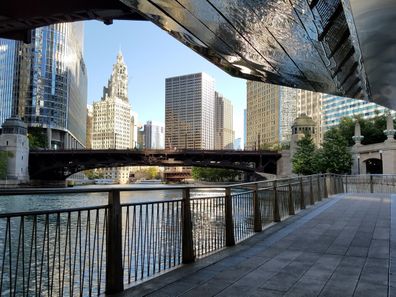
Chicago River chops through the city like an aquatic catwalk, lined with steel models on each side like the fat-bottomed Merchandise Mart, whose generous facade hosts a free nightly projection show that reminds me of Vivid Sydney.
Other standouts include Marina City, twin towers that look like giant corncobs, the Art Deco Carbide and Carbon Building with its crown of 24-karat gold leaf, and—my favourite—the neo-gothic Tribune Tower, a modern steel skeleton built as an ode to journalism with limestone taken from famous landmarks including Great Wall of China, Taj Mahal, the Colosseum and Westminster Abbey (there’s even a piece of moon rock in there, somewhere).
Chicago reflects the evolution of architecture in a way no other city on Earth can, which makes floating up the Chicago River akin to taking an urban safari. On architectural boat tours, guides will point out the story behind some of these buildings, as well as a few interesting bits and bops from the history of the Chicago River
Did you know a certain rock band once “accidentally” unloaded 362 kilograms of human waste from a bridge, missing the Chicago River entirely and baptising an open-top sightseeing boat instead? To alleviate some of their guilt, Dave Matthews Band donated $150,000 to the city so they could, as Dave Matthews put it, “begin the healing process”.
Or that one of the river’s most impressive buildings, the rippling St. Regis Chicago, is the world’s tallest building designed by a woman?
Being surrounded by these magnificent structures is like a surge of inspiration, and you can cruise the Chicago River in many different ways. There are even tour groups that stalk the river in kayaks. Seasonally, you can take a floating hot tub up and down the cinematic waterway, and I’ve even seen people driving floating cars under the bridges.
Where else to find beautiful architecture in Chicago
Chicago’s beauty extends far beyond the river.
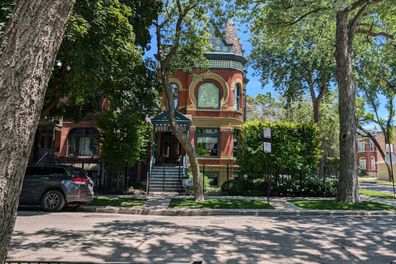
My favourite spot for dumplings in America is Lao Peng You in Old Town, while my favourite bakery in the country is Mindy’s in Wicker Park. Between the two neighbourhoods is a long tree-lined street, N Hoyne, with some of the most beautiful homes I’ve ever seen. These immaculate, mostly Victorian houses reflect the many ideas of the architects who flooded into Chicago after the Great Fire.
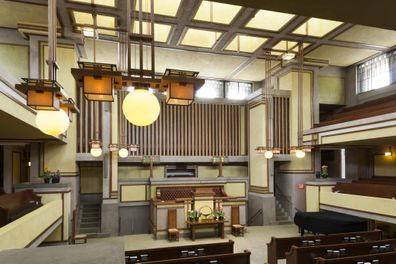
Head on over to Oak Park, about a 14-minute drive from the River Walk, and you can tour the home and studio that Frank Lloyd Wright worked out of. The pleasant neighbourhood features many of his prairie-style houses, as well as the brilliantly unique Unity Temple.
From the outside, the non-denominational church, a UNESCO World Heritage site, is a brutalist slab of reinforced concrete shaped as a cube. Inside, however, is a wonderfully geometric reconception of church architecture, with multi-coloured features and an air of solemnity.
Nearby is a gorgeous Queen-Anne style home dating back to 1890. Its generous wraparound porch and elegant parlour fit well with Oak Park’s idyllic atmosphere. This is where Ernest Hemingway grew up.
Frank Lloyd Wright’s works draw architecture enthusiasts from around the world, including his visionary Robie House in leafy historic Hyde Park, where the Obamas grew up. This gorgeous South Side suburb also hosts the University of Chicago campus, which features several architectural highlights.
Explore the ritzy Gold Coast, where rows of impressive mansions tell the story of Chicago’s upper crust, while an hour uptown will bring you to The Green Mill, one of the most beautiful jazz clubs in the country and once a regular haunt for Al Capone. Walk a bit further and you’ll reach a large bird sanctuary, flanked by one of Chicago’s many beautiful city beaches on one side, and a lakeside golf course on the other.
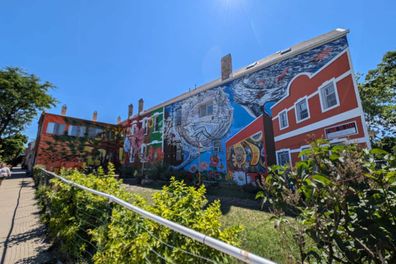
Over in Pilsen, one of the city’s two prominent Mexican neighbourhoods, you’ll spy buildings papered with incredible murals that tell the history of the area. Here, the free-entry National Museum of Mexican Art stands as one of the city’s best-kept secrets, with over 18,000 works, including some by Frida Kahlo and Diego Rivera.
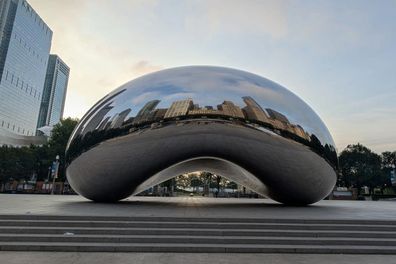
Art is another reason Chicago stuns more than most. The city’s sprawling Millennium Park is an ode to cultivated gardens and public art, including Anish Kapoor’s famously reflected Cloud Gate and two digitised glass pillars of water by Jaume Plensa.
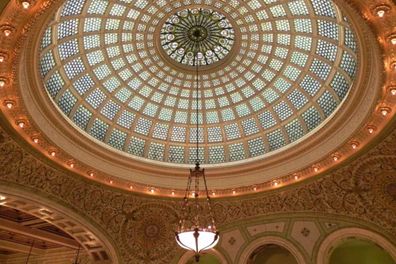
The Art Institute of Chicago’s bounty of masterpieces is almost unfathomable, and if you climb to the top of the Chicago Cultural Centre, you’ll find the largest Tiffany dome in the world, with 30,000 pieces of glass arranged in an intricate Renaissance pattern.
This city of steel has stolen my heart on each visit, to the point where I’m ashamed Australia still doesn’t have a non-stop route to the Midwestern capital. Here’s to hoping that changes sooner rather than later.